


What is RF Modulator
RF modulator (radio frequency modulator) is an electronic device used to convert signals from devices such as media players, VCRs and game consoles to a format that can be handled by a device designed to receive a modulated RF input, such as a radio or television receiver. Its input is a baseband signal, which is used to modulate a radio frequency source. RF modulators operate on different channels depending on the region and have been integrated into various home electronics. However, they tend to produce lower image quality than a baseband connection due to losses during the modulation and demodulation process. In professional broadcast settings, more sophisticated modulators are used.
Advantages of RF Modulator
Compatibility: In addition to providing compatibility with audio/video equipment that is more than a decade old, RF modulators can also provide compatibility with televisions that lack modern input connections such as HDMI or composite connections. In televisions with only RF antenna inputs, old devices like video recorders and DVD players can be connected through RF modulators.
Simple Setup: In most cases, setting up an RF modulator is straightforward. A TV's antenna input is connected to the modulator's RF output, and the user's devices should connect the modulator's baseband audio/video signals to the modulator. People with minimal technical knowledge can use RF modulators as a result of their simplicity.
Cost-Effectiveness: Older audio and video equipment can be connected to televisions more cost effectively with RF modulators. It gives legacy devices more life and avoids having to replace or upgrade them in the future at a relatively low cost.
-
![12 Channel High Speed HDMI H.264 Encoder]() 12 Channel High Speed HDMI H.264 EncoderDMB-8820E Series Multi-Channel H.264 /H.265 HD Encoder features high performance, ultra-low latency and low bit rates for DTV systems, and adopts state-of-the-art compression technologyread more
12 Channel High Speed HDMI H.264 EncoderDMB-8820E Series Multi-Channel H.264 /H.265 HD Encoder features high performance, ultra-low latency and low bit rates for DTV systems, and adopts state-of-the-art compression technologyread more -
![16 Channel IP QAM Modulator]() 16 Channel IP QAM ModulatorDMB-9581E series multi-channel H.264 HD Encoding & Modulator (all-in-one) is a high-density and flexible device, integrating encoding 8/12/16/20 up to 24*HDMI in, multiplexing, encapsulation andread more
16 Channel IP QAM ModulatorDMB-9581E series multi-channel H.264 HD Encoding & Modulator (all-in-one) is a high-density and flexible device, integrating encoding 8/12/16/20 up to 24*HDMI in, multiplexing, encapsulation andread more -
![Channel Vision Encrypted Rf Modulator]() Channel Vision Encrypted Rf ModulatorTitle:IP to DVB-T RF Modulator. Model:DMB-24E. Highlight. DMB-24E Series 8/12/16/20/24 channels RF TO RF broadcast transmodulator, 4 tuners portsper module up to 6 modules in back panel, demodulateread more
Channel Vision Encrypted Rf ModulatorTitle:IP to DVB-T RF Modulator. Model:DMB-24E. Highlight. DMB-24E Series 8/12/16/20/24 channels RF TO RF broadcast transmodulator, 4 tuners portsper module up to 6 modules in back panel, demodulateread more -
![Channel Vision Rf Modulator]() Channel Vision Rf ModulatorTitle:IP to DVB-T RF Modulator. Model:DMB-5100E. Highlight. 1: hundreds of IP Streaming udp/rtp to modulate to digital rf signal for coax system. 2: IP input 3*128MPTS/SPTS UDP/IP input fromread more
Channel Vision Rf ModulatorTitle:IP to DVB-T RF Modulator. Model:DMB-5100E. Highlight. 1: hundreds of IP Streaming udp/rtp to modulate to digital rf signal for coax system. 2: IP input 3*128MPTS/SPTS UDP/IP input fromread more -
![Tv Channel Modulator]() Tv Channel ModulatorDMB-9581E series multi-channel H.264 HD Encoding & Modulator (all-in-one) is a high-density and flexible device, integrating encoding 8/12/16/20 up to 24*HDMI in, multiplexing, encapsulation andread more
Tv Channel ModulatorDMB-9581E series multi-channel H.264 HD Encoding & Modulator (all-in-one) is a high-density and flexible device, integrating encoding 8/12/16/20 up to 24*HDMI in, multiplexing, encapsulation andread more -
![Digital Channel Modulator]() Digital Channel ModulatorDMB-9581E series multi-channel H.264 HD Encoding & Modulator (all-in-one) is a high-density and flexible device, integrating encoding 8/12/16/20 up to 24*HDMI in, multiplexing, encapsulation andread more
Digital Channel ModulatorDMB-9581E series multi-channel H.264 HD Encoding & Modulator (all-in-one) is a high-density and flexible device, integrating encoding 8/12/16/20 up to 24*HDMI in, multiplexing, encapsulation andread more -
![FTA 24 Tuners RF Modulator]() FTA 24 Tuners RF ModulatorDMB-9581E series multi-channel H.264 HD Encoding & Modulator (all-in-one) is a high-density and flexible device, integrating encoding 8/12/16/20 up to 24*HDMI in, multiplexing, encapsulation andread more
FTA 24 Tuners RF ModulatorDMB-9581E series multi-channel H.264 HD Encoding & Modulator (all-in-one) is a high-density and flexible device, integrating encoding 8/12/16/20 up to 24*HDMI in, multiplexing, encapsulation andread more -
![HD Streaming Encoder Modulator]() HD Streaming Encoder ModulatorDMB-9581EC Series Multi-Channel H.264 HD Encoder Modulator features high performance, ultra-low latency and low bit rates for DTV systems, and adopts state-of-the-art compression technologyread more
HD Streaming Encoder ModulatorDMB-9581EC Series Multi-Channel H.264 HD Encoder Modulator features high performance, ultra-low latency and low bit rates for DTV systems, and adopts state-of-the-art compression technologyread more -
![CAM CI To RF Modulator]() CAM CI To RF ModulatorTitle:IP to DVB-T RF Modulator. Model:DMB-24E-CI. Highlight. DMB-24E Series 8/12/16/20/24 channels RF TO RF broadcast transmodulator, 4 tuners portsper module up to 6 modules in back panel,read more
CAM CI To RF ModulatorTitle:IP to DVB-T RF Modulator. Model:DMB-24E-CI. Highlight. DMB-24E Series 8/12/16/20/24 channels RF TO RF broadcast transmodulator, 4 tuners portsper module up to 6 modules in back panel,read more -
![Digital CI To RF Modulator]() Digital CI To RF ModulatorTitle:IP to DVB-T RF Modulator. Model:DMB-24E. Highlight. DMB-24E Series 8/12/16/20/24 channels RF TO RF broadcast transmodulator, 4 tuners portsper module up to 6 modules in back panel, demodulateread more
Digital CI To RF ModulatorTitle:IP to DVB-T RF Modulator. Model:DMB-24E. Highlight. DMB-24E Series 8/12/16/20/24 channels RF TO RF broadcast transmodulator, 4 tuners portsper module up to 6 modules in back panel, demodulateread more -
![Digital To RF Modulator]() Digital To RF ModulatorTitle:IP to DVB-T RF Modulator. Model:DMB-24E. Highlight. DMB-24E Series 8/12/16/20/24 channels RF TO RF broadcast transmodulator, 4 tuners portsper module up to 6 modules in back panel, demodulateread more
Digital To RF ModulatorTitle:IP to DVB-T RF Modulator. Model:DMB-24E. Highlight. DMB-24E Series 8/12/16/20/24 channels RF TO RF broadcast transmodulator, 4 tuners portsper module up to 6 modules in back panel, demodulateread more -
![DVB-SS2 HDMI To RF Modulator]() DVB-SS2 HDMI To RF ModulatorDMB-24E Series 8/12/16/20/24 channels RF TO RF broadcast transmodulator, 4 tuners ports per module up to 6 modules in back panel, demodulate the modulated RF signal and multiplexing,then up-converterread more
DVB-SS2 HDMI To RF ModulatorDMB-24E Series 8/12/16/20/24 channels RF TO RF broadcast transmodulator, 4 tuners ports per module up to 6 modules in back panel, demodulate the modulated RF signal and multiplexing,then up-converterread more


Our Factory
Hangzhou Dtvane Technology Co., Ltd. is located in China National High-Tech Development Zone, focusing on digital TV and network video system product development and sales, especially in high-quality video compression processing and channel transmission technology to maintain a leading edge, which is the domestic first-class of professional video operating system products and technical service providers.
Product Application
DVB-S/S2/S2X/ATSC/DVB-C/DVB-T/ISDB-T DIGITAL Cable TV Broadcasting SYSTEM
Video/Audio play online Any Screen Anywhere Any time (CCTV/ UAV/ Conference/ Speech/ Church/ School/ Wedding and so on)
Analog TV System upgrade to HD Digital TV System
Various IPTV OTT Application (Community/ Hospitality /Community/Hospital/Resort and so on)
FTTH/CATV/HDTV Fiber Transmission Solution including but not limited to above, DIGICAST Provide devices and solution for all applications that involve to video/audio convert, transport and distribute.
R&D
All equipments in our product portfolio are fully self-developed in our laboratories. With technology development and upgrading, it drives us to innovate constantly, via continuous researches and investments, our R&D team consists of high-qualified engineers and technicians, who work hard to design, develop new devices and improve current technology.
Our service
1: Original Factory Directly Price, Ready to Ship
2: Quality Guarantee, no worries on Products, expand your market rapidly
3: After-Sales : Remote Access for Technical Support 24*7 Lifetime
4: Professional R&D Team for various OEM/ODM services
How Does RF Modulator Work
An RF modulator functions by taking a baseband audio and video signal and modulating it onto a radio frequency carrier wave. This process is crucial for transmitting audio and video signals over long distances, such as through coaxial cables or over the airwaves. The modulator essentially packages the audio and video signals into a format that can be easily transmitted and received by standard television sets.
To begin with, the baseband audio and video signals, typically in the form of composite video and audio signals, carry the necessary information for transmission, such as the visual and auditory content of a television program or a video game. The RF modulator combines these signals into a single signal that can be transmitted over a single channel.
The next step involves modulation, where the combined audio and video signal is modulated onto a carrier wave at a specific frequency. This carrier wave acts as the medium through which the audio and video information is transmitted. The modulator ensures that the combined signal is modulated in a manner that allows for easy demodulation and separation into its original audio and video components at the receiving end.
Once the signal is modulated onto the carrier wave, it can be transmitted through a coaxial cable or over the air to a television or other receiving device. At the receiving end, a demodulator or tuner is utilized to extract the audio and video signals from the carrier wave, enabling them to be displayed and heard on the television screen and speakers.
In summary, the RF modulator operates by taking baseband audio and video signals, combining them, modulating them onto a carrier wave, and transmitting them to a receiving device where they can be demodulated and separated back into their original components for display and playback.
Where do you use an RF Modulator
The use of RF modulators is ubiquitous. A modulator can be found in almost every electronic gadget. These modulators function in the background to broadcast our signals on various frequencies, some broadcast via the internet and others through the phone line. RF modulators work on the radio frequency, and as a result, they have a wide range of applications. Take a look at the answers to the following questions:
Giving Life To Your Old Devices
Many of us have ancient devices that are still in good working order. Perhaps some old game consoles? Or a DVD player with several old movie disks that haven't been used in a long time? Or a video camera with old footage? These gadgets no longer have appropriate connectors to connect to current screens.
However, the device may be connected to our modern televisions via a radio frequency or coaxial connection using an RF Modulator. This might be used to bring back many devices without investing a lot of money.
You can now view your childhood records, play old games, and check out your old movie collection on your regular television. This rule also applies to older televisions, where an RF Modulator can be used to transform current device signals so that they are compatible with older TV inputs.
Connecting To Multiple Screens Easily
We often find ourselves in circumstances where we need to transmit a single signal to several screens. We've all experienced the frustration of having only one TV connection and needing to watch the game from various locations.
Fortunately, you won't have to purchase a new cable connection to play that one game. You may transfer the signal from one television to several screens throughout your home with an RF Modulator.
You may now watch your game whenever you want in the comfort of your own home without having to invite ten others over! You can now have better parties without needing to spend more money.
Broadcasting A Signal Within Range
We frequently need to send a signal to many devices nearby. Directors require this to transmit their camera input to many displays for viewing by other crew members. Security camera footage is frequently sent through Radio Frequency, which requires an RF Modulator. It's also great for streaming live games to stadium displays.
RF Modulators are ideal instruments for local broadcasting for whatever reason you may have. They can be amplified and transmitted within a given range since they utilize Radio Frequency, which allows any device with an antenna to pick up and display the signal.
Industrial Applications
Almost every device has some industrial application. While you may not find it useful, you may be content to know the extra information and be the party's know-it-all.
RF modulators are widely used in the defense and aviation industries. Frequencies delivered to planes must be modulated, necessitating a strong RF Modulator to send the signal. Radars employ radio frequencies to transmit their signal. Since it is so sensitive, it necessitates a powerful RF Modulator to transform and transmit radio signals that may be used to detect things in the airspace. This is also true in television and radio transmission, where huge RF modulators are employed to transform the signal before it is aired to the public, amplified, and commercially disseminated.
If your equipment includes an RF modulator, ensure it's turned on (through the on-screen menu) and programmed to the appropriate channel number (the work on the standard TV 21 to 68 UHF channel numbers).
If you're using a stand-alone RF modulator box, plug a SCART line from your set-top box or recorder into one end and a regular coax aerial lead. After that, follow the on-screen directions to select a channel number.
Assuming the RF modulator is turned on and connected, connect the second TV to it with an aerial cable, and then tune the second TV to the RF channel number that the modulator is set to (21 to 68 UHF). As if it were a television channel, you watch the output.
Things to Consider Before Buying the Best RF Modulator

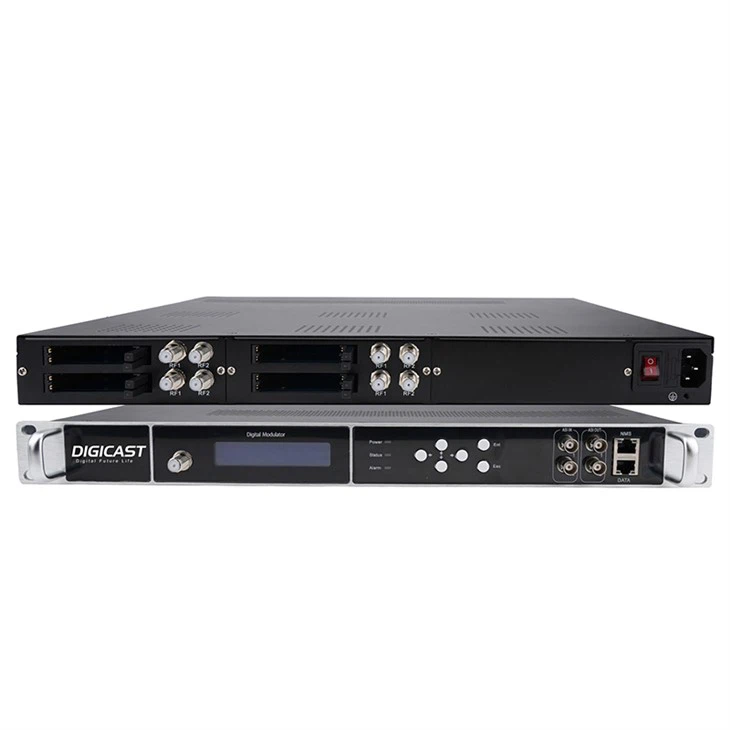


1. Compatibility: Check if the modulator is compatible with your existing equipment, including your source devices (such as Blu-ray players, gaming consoles, or computers) and your destination devices (such as TVs or monitors).
2. Video and Audio Quality: Look for an modulator that supports high-definition video and clear audio transmission. Ensure that it can handle the resolution and audio formats of your content.
3. Channel Selection: Some modulators allow you to select specific RF channels for transmission. Consider whether you need this feature, especially if you're integrating the modulator into an existing channel lineup.
4. RF Output: Check the type of RF output supported by the modulator (usually PAL or NTSC). Make sure it matches the standard used by your TVs or distribution system.
5. Ease of Installation: Look for an modulator that is easy to install and set up. Consider whether it requires additional hardware or software for configuration.
6. Number of Inputs: Determine how many inputs you need. Some modulators have multiple inputs, allowing you to connect multiple source devices simultaneously.
Quality of Video
When choosing the best RF modulators, evaluating the quality of video and audio output is crucial. The quality of video directly affects the viewing experience, while the quality of audio impacts the clarity and realism of sound. First, for video output, it is necessary to choose a modulator that supports high-definition resolution (1080p or 4K), ensuring clear, vivid images on connected TVs or displays. Maintaining color depth and accuracy is also crucial, as this preserves the authenticity and detail of the images, enhancing the viewing experience. Additionally, employing advanced compression techniques can reduce signal distortion, ensuring stable video signals even over long-distance transmissions.
For audio output, the modulator should support various audio formats, including stereo, surround sound, and lossless audio. The quality of audio transmission directly affects the clarity and realism of sound, so it is essential to choose a modulator with audio passthrough capability. This means that the original audio signal can be transmitted without compression or distortion, ensuring high-fidelity sound. Moreover, some modulators also offer delay correction and audio sync features to ensure that audio remains synchronized with video, avoiding delays or desynchronization.
Configuration
When selecting the best RF modulators, ease of use and setup are crucial considerations. Firstly, ensure the modulator has an intuitive user interface and a simple setup process, allowing for easy configuration and management of the device. Secondly, consider the modulator's ease of installation, choosing devices with plug-and-play functionality to reduce installation and debugging time and labor costs. Additionally, the modulator should offer flexible control options, allowing users to easily adjust output signals and parameter settings to meet the needs of different environments and applications. Lastly, consider the stability and reliability of the modulator, selecting products from reputable brands with a good reputation to ensure long-term stable operation and high-quality service support. By considering these factors, you can choose the RF modulator that best suits your needs, providing a high-quality solution for audio and video transmission.
Cost Performance
Cost-effectiveness is one of the important considerations for purchasing the best RF modulator. Firstly, consider the balance between the price and performance of the modulator. Choosing a moderately priced but fully featured modulator can save costs while ensuring quality. Secondly, evaluate the features and performance offered by the modulator to ensure they meet your actual needs. For example, consider the supported video resolutions, audio formats, and the number of channels. Thirdly, consider the reliability and durability of the modulator. Choose a product from a well-known brand that can provide long-term stable use and reliable after-sales support. Finally, compare different brands and models of modulators, evaluating their performance, features, and prices to choose the most cost-effective product. Through this approach, you can select an RF modulator that meets your requirements and provides a cost-effective solution for your audio and video transmission needs.
Input Interface: This is where signals from the source device connect to the modulator. It typically includes HDMI input ports.
Encoder: Converts the digital audio and video signals from into a format suitable for RF transmission, preparing them for modulation.
Modulator: Modulates the encoded signals onto specific radio frequencies, readying them for transmission over coaxial cables.
Power Supply: Provides necessary power for operation, either through a built-in supply or an external adapter.
Channel Assignment Controls
Allows users to assign a specific RF channel to the modulated signal, facilitating transmission to TVs with RF tuners.
Output Interface
Where the modulated RF signal is outputted, usually via a coaxial cable connection.
User Interface
Some modulators feature interfaces for configuration and settings adjustment, such as physical buttons, a display screen, or a digital interface accessible via computer or mobile device.
Installation of RF Modulator
Mounting the Modulator: Choose a location accessible to both the source device (like a cable box or media player) and the cable infrastructure in your building. Typically, this is a wall or a rack near the source device and close to where the coaxial cable infrastructure is accessible. Use appropriate hardware to securely mount the RF modulator on the chosen location (wall or rack). Ensure it is stable and easily accessible for future adjustments or maintenance.
Connecting Source Device: Use a high-quality cable to connect the source device (e.g., cable box) to one of the HDMI input ports on the modulator.
Connecting to Coaxial Cable Infrastructure: Attach one end of a coaxial cable to the RF output port of the HDMI modulator. Connect the other end to the existing coaxial cable infrastructure in your building or center.
Powering the Modulator: Depending on the model, power the modulator using either the built-in power supply or an external power adapter. Ensure it is plugged into a reliable power source.
Configuring the Modulator: Access the modulator's settings through its controls or user interface. Configure settings such as channel assignment and modulation type according to your specific needs. Refer to the manufacturer's manual for detailed instructions tailored to your modulator model.
Testing the Setup: Verify the installation by tuning a television set to the channel assigned to the modulator. Ensure the video and audio quality meet expectations. Fine-tune settings if necessary to optimize performance.
Securing and Labeling Cables: Use appropriate cable management techniques to secure all cables. Label the RF modulator and associated cables for easy identification during future maintenance or adjustments.
Referencing Manufacturer's Manual: For any specific details or troubleshooting tips, consult the manufacturer's manual provided with your HDMI RF modulator. It contains model-specific instructions and guidelines.
FAQ
As one of the most professional rf modulator manufacturers and suppliers in China, we're featured by quality products and good service. Please rest assured to wholesale high-grade rf modulator from our factory.
rf modulator, Digital Modulator, Digital RF Moduator