


Hey there! As an RF modulator supplier, I often get asked this question: "Does an RF modulator work with all TV channels?" Well, let's dive right into it and find out.
First off, let's quickly understand what an RF modulator is. An RF modulator is a device that takes an audio - video (AV) signal and converts it into a radio frequency (RF) signal. This RF signal can then be transmitted over a coaxial cable and received by a TV set. It's super handy, especially when you have devices that don't have a direct connection option to your TV.
Now, the big question: Does it work with all TV channels? The short answer is no, but it's a bit more complicated than that.
Compatibility with Analog and Digital Channels
Let's start with the difference between analog and digital TV channels. In the old days, most TV broadcasts were analog. Analog TV signals are continuous waves that carry audio and video information. RF modulators were initially designed to work with analog TV channels. They could take an AV signal from a VCR, a game console, or a camcorder and convert it into an analog RF signal that could be tuned in on an analog TV.
However, the world has moved on, and digital TV is now the norm. Digital TV channels use a completely different technology. They transmit data in discrete packets, which allows for better picture quality, more channels, and additional features like closed - captioning and interactive services.
Most modern RF modulators are designed to work with both analog and digital TV channels. But here's the catch. For digital channels, they usually support specific digital standards. For example, in North America, the Advanced Television Systems Committee (ATSC) standard is used for over - the - air digital TV broadcasts. If your RF modulator is an ATSC - compliant one, it can work with ATSC digital TV channels. But if you're in a different region with a different digital standard, like DVB - T in Europe, it might not work as expected.
Frequency Ranges
Another factor that affects compatibility is the frequency range of the RF modulator and the TV channels. TV channels are assigned specific frequency ranges. In the United States, for example, VHF (Very High Frequency) channels range from 54 - 216 MHz, and UHF (Ultra High Frequency) channels range from 470 - 890 MHz.
An RF modulator has a limited frequency range within which it can operate. Some basic RF modulators might only cover a few specific channels in the VHF or UHF band. So, if you're trying to use it with a channel that falls outside its frequency range, it simply won't work.
Higher - end RF modulators, like our Digital RF Moduator, usually have a wider frequency range. They can cover a broader spectrum of TV channels, both VHF and UHF, increasing the chances of compatibility.
Cable TV and Satellite TV
When it comes to cable TV and satellite TV, things get a bit more complex. Cable TV providers often use a mix of analog and digital signals, and they might also scramble some of the channels to prevent unauthorized access.
An RF modulator can still be used in a cable TV setup, but you need to make sure it's compatible with the cable TV system's frequency plan. Some CATV modulators are specifically designed for cable TV applications. They can handle the unique requirements of cable TV, such as the higher frequencies used for digital cable channels and the signal encryption.
Satellite TV, on the other hand, has its own set of rules. Satellite TV signals are received via a satellite dish and are usually in a completely different frequency range compared to over - the - air or cable TV. In most cases, an RF modulator is not directly compatible with satellite TV. You'd need a special device to interface between the satellite receiver and your TV.
Channel - Specific Issues
Even if an RF modulator is technically compatible with a TV channel's frequency range and digital standard, there can still be channel - specific issues. Some TV channels might have special encoding or modulation techniques that the RF modulator can't handle properly.
For example, some high - definition (HD) channels use a more advanced compression algorithm to fit the large amount of data into the available bandwidth. If your RF modulator doesn't support this compression algorithm, you might experience issues like pixelation, freezing, or loss of audio.
So, What Should You Do?
If you're looking to use an RF modulator, here are some tips. First, check the specifications of the RF modulator. Look for information about its frequency range, digital standards support, and compatibility with different types of TV systems (analog, digital, cable, etc.).
If you're using it with a digital TV, make sure it's compliant with the digital standard used in your region. If you're in a cable TV setup, consider getting a CATV - specific modulator.

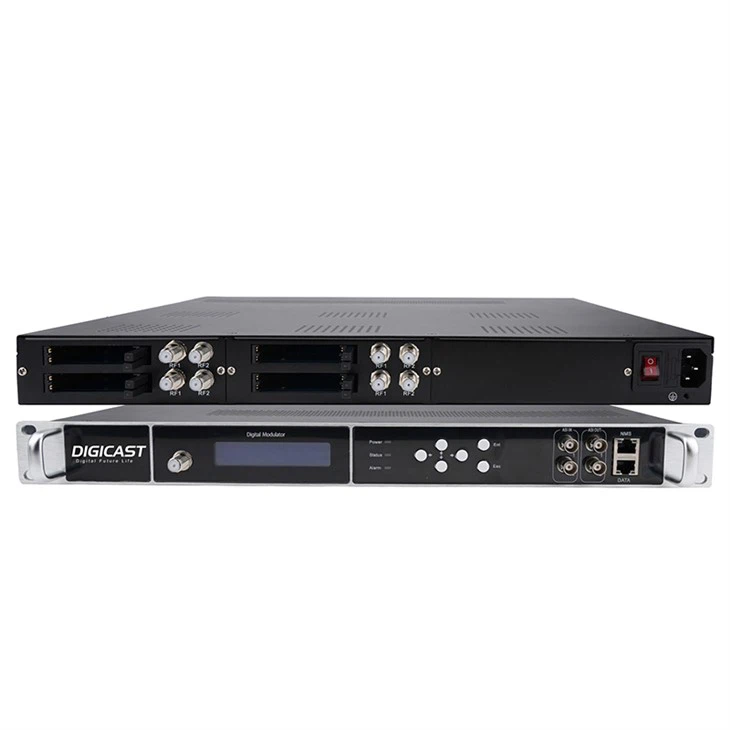
And of course, if you're still not sure, don't hesitate to reach out to us. As an RF modulator supplier, we have a team of experts who can help you choose the right modulator for your needs. Whether you're a home user looking to connect an old device to your new TV or a business setting up a complex AV system, we've got you covered.
We understand that every situation is unique, and we're committed to providing you with the best solution. So, if you're interested in purchasing an RF modulator or have any questions about our products, just let us know. We're here to assist you with your procurement process and make sure you get the most out of your RF modulator.
References
- "Digital Television Transmission: ATSC, DVB, ISDB" by B. P. Lathi and Zhi Ding
- "RF and Microwave Circuit Design for Wireless Communications" by Christopher Bowick