


As a supplier of ISDB-T Modulators, I've witnessed firsthand the growing demand for seamless integration of this technology with other equipment in the broadcast and communication industry. The ISDB-T (Integrated Services Digital Broadcasting - Terrestrial) standard is widely used in many countries for digital terrestrial television broadcasting, and an ISDB-T Modulator plays a crucial role in converting digital signals into a format suitable for transmission over the airwaves. In this blog, I'll explore the various integration methods of an ISDB-T Modulator with other equipment, which can significantly enhance the efficiency and functionality of broadcasting systems.
Integration with Encoders
One of the most common integration scenarios is between an ISDB-T Modulator and an encoder. Encoders are responsible for compressing and encoding digital video and audio signals into a format that can be efficiently transmitted. When integrating an ISDB-T Modulator with an encoder, the output of the encoder, typically in the form of an MPEG-2 or MPEG-4 Transport Stream (TS), is fed directly into the input of the modulator.
The integration process usually involves a simple physical connection using coaxial cables or fiber optic cables, depending on the distance between the encoder and the modulator. Additionally, the two devices need to be configured to work together. This includes setting the appropriate bitrate, input format, and other parameters in the encoder to match the requirements of the ISDB-T Modulator. For example, the encoder should be set to output a TS with the correct packet size and transport stream ID (TSID) that the modulator can recognize and process.
By integrating an ISDB-T Modulator with an encoder, broadcasters can ensure that high - quality digital content is efficiently encoded and modulated for transmission. This combination also allows for easy scalability, as broadcasters can upgrade either the encoder or the modulator independently to meet changing content and transmission requirements.
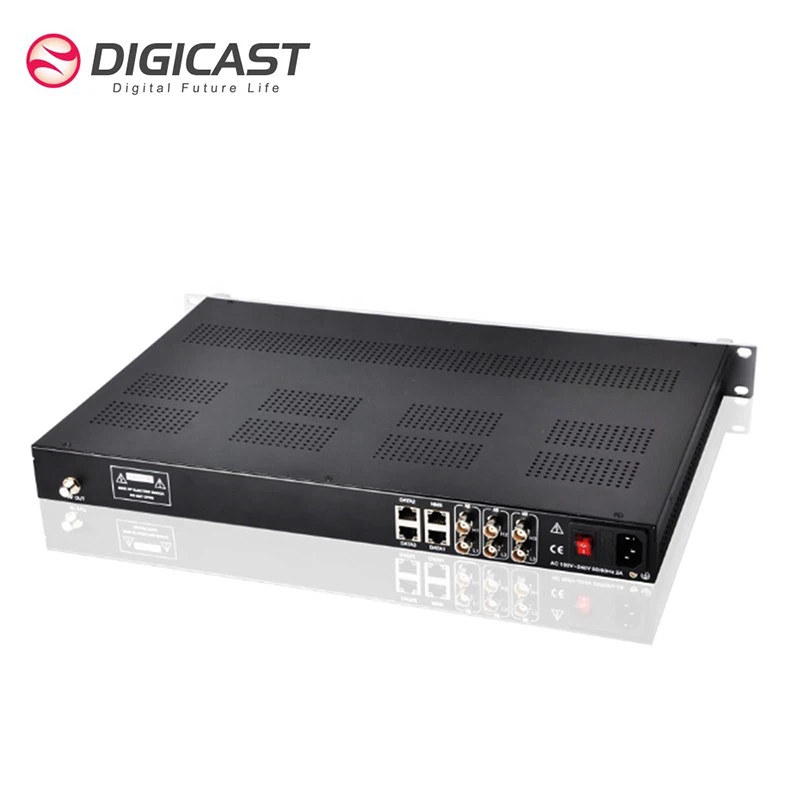

Integration with Multiplexers
Multiplexers are used to combine multiple digital streams into a single transport stream. Integrating an ISDB-T Modulator with a multiplexer is essential for broadcasters who want to transmit multiple channels over a single frequency. The multiplexer takes in multiple input streams from different sources, such as encoders or satellite receivers, and combines them into a single TS. This combined TS is then sent to the ISDB-T Modulator for modulation.
The integration between a multiplexer and an ISDB-T Modulator requires careful configuration to ensure that the multiplexed stream meets the ISDB-T standard. The multiplexer needs to be set up to allocate the appropriate bandwidth to each channel in the multiplexed stream, and the modulator needs to be configured to handle the combined stream correctly. For example, the modulator should be set to the correct modulation scheme (such as QPSK, 16QAM, or 64QAM) and symbol rate based on the characteristics of the multiplexed stream.
This integration enables broadcasters to maximize the use of available frequency spectrum by transmitting multiple channels simultaneously. It also simplifies the transmission infrastructure, as only one modulator is needed to handle the multiplexed stream instead of multiple modulators for each individual channel.
Integration with Transmitters
The final step in the broadcasting chain is the integration of an ISDB-T Modulator with a transmitter. The transmitter is responsible for amplifying the modulated signal and radiating it into the airwaves. The output of the ISDB-T Modulator, which is a low - power modulated RF signal, is connected to the input of the transmitter.
The integration between the modulator and the transmitter requires precise matching of the electrical characteristics of the two devices. The modulator should be set to output a signal with the correct frequency, power level, and impedance that the transmitter can accept. Additionally, the transmitter needs to be configured to amplify the signal to the appropriate power level for the desired coverage area.
For example, in a small - scale local broadcasting system, a low - power transmitter may be sufficient, while a large - scale regional or national broadcasting system may require a high - power transmitter. By integrating the ISDB-T Modulator with the transmitter, broadcasters can ensure that the modulated signal is efficiently amplified and transmitted to reach the intended audience.
Integration with Monitoring and Control Systems
In modern broadcasting systems, it is essential to integrate an ISDB-T Modulator with monitoring and control systems. These systems allow operators to monitor the performance of the modulator and other equipment in real - time and make adjustments as needed.
Monitoring systems can be connected to the ISDB-T Modulator to collect data on various parameters, such as signal strength, modulation quality, and bit error rate. This data can be used to detect and diagnose any problems with the modulator or the overall broadcasting system. Control systems, on the other hand, can be used to remotely configure the modulator, such as changing the modulation scheme, frequency, or power level.
The integration with monitoring and control systems is typically achieved through a network connection, such as Ethernet or serial communication. The modulator is equipped with appropriate interfaces to communicate with the monitoring and control systems. This integration provides operators with greater visibility and control over the broadcasting process, ensuring reliable and high - quality transmission.
Considerations for Successful Integration
When integrating an ISDB-T Modulator with other equipment, several considerations need to be taken into account. First, compatibility is crucial. All the equipment should be designed to work together and support the same standards and protocols. For example, the encoder, multiplexer, modulator, and transmitter should all support the ISDB-T standard and use compatible data formats.
Second, proper grounding and shielding are essential to prevent electromagnetic interference (EMI) and ensure reliable operation. All the equipment should be properly grounded, and cables should be shielded to minimize the impact of external interference.
Third, software updates and maintenance are important. As technology evolves, software updates for the ISDB-T Modulator and other integrated equipment may be required to improve performance, add new features, or address security vulnerabilities. Regular maintenance, including cleaning, calibration, and component replacement, should also be carried out to ensure the long - term reliability of the integrated system.
Conclusion
The integration of an ISDB-T Modulator with other equipment is a complex but essential process for modern broadcasting systems. By integrating with encoders, multiplexers, transmitters, and monitoring and control systems, broadcasters can achieve efficient, high - quality digital terrestrial television transmission. As a supplier of ISDB-T Modulators, we understand the importance of seamless integration and are committed to providing products that are easy to integrate with other industry - standard equipment.
If you are interested in learning more about our ISDB-T Modulators or discussing how they can be integrated into your existing broadcasting system, we invite you to contact us for a procurement discussion. Our team of experts is ready to assist you in finding the best solutions for your specific needs.
References
- "Digital Terrestrial Television Broadcasting: Technology and Standards" by John C. Bellamy.
- "ISDB - Terrestrial: The Japanese Digital Terrestrial Television Standard" by the International Telecommunication Union (ITU).