


DVB - S2, short for Digital Video Broadcasting - Second Generation Satellite, is a standard that has revolutionized satellite television broadcasting. As a DVB - S2 modulator supplier, I often encounter a common question from potential clients: Can a DVB - S2 modulator support multiple channels? In this blog post, I will delve into this topic, exploring the technical aspects, capabilities, limitations, and practical considerations related to multi - channel support in DVB - S2 modulators.
Understanding DVB - S2 Modulators
Before we discuss multi - channel support, it's essential to understand what a DVB - S2 modulator does. A DVB - S2 modulator is a device used in satellite broadcasting systems to convert digital baseband signals into radio - frequency (RF) signals suitable for transmission via satellite. It takes input data streams, which can include audio, video, and other digital content, and modulates them onto a carrier frequency using the DVB - S2 modulation scheme.
The DVB - S2 standard offers several advantages over its predecessor, DVB - S. It provides higher spectral efficiency, which means more data can be transmitted within a given bandwidth. This is achieved through advanced modulation and coding techniques, allowing broadcasters to deliver more channels or higher - quality content over the same satellite transponder.
Technical Capacity for Multiple Channels
The answer to whether a DVB - S2 modulator can support multiple channels is a resounding yes. In fact, modern DVB - S2 modulators are designed with multi - channel support in mind. The key factor that enables this is the standard's high spectral efficiency.
DVB - S2 uses advanced modulation schemes such as Quadrature Phase - Shift Keying (QPSK), 8 - Phase - Shift Keying (8PSK), and 16 - Amplitude Phase - Shift Keying (16APSK). These modulation schemes allow for different levels of data throughput. For example, 16APSK can carry more data per symbol compared to QPSK, which in turn allows for more channels to be multiplexed within the same bandwidth.
Another important aspect is the Forward Error Correction (FEC) mechanism in DVB - S2. FEC adds redundant information to the data stream, which helps in correcting errors that may occur during transmission. By optimizing the FEC rate, broadcasters can balance the need for reliable transmission with the desire to maximize the number of channels.
Most DVB - S2 modulators on the market today are capable of supporting multiple Program - Associated Tables (PAT) and Program - Specific Information (PSI). These tables are used to organize the different channels within the multiplexed stream. Each channel can have its own set of audio, video, and service information, which the modulator combines into a single RF signal.
Practical Considerations for Multi - Channel Support
While DVB - S2 modulators have the technical capacity to support multiple channels, there are several practical considerations that need to be taken into account.
Bandwidth Limitations: The available bandwidth on a satellite transponder is a finite resource. The number of channels that can be supported depends on the bandwidth of the transponder and the bitrate required for each channel. Higher - quality channels with more advanced features such as High - Definition (HD) or Ultra - High - Definition (UHD) video will require more bandwidth compared to Standard - Definition (SD) channels. Therefore, broadcasters need to carefully plan their channel lineup to ensure that they do not exceed the available bandwidth.
Signal Quality: As more channels are added to the modulator, the signal quality may be affected. The increased data rate can lead to higher levels of interference and noise, which can degrade the overall performance of the system. To mitigate this, broadbanders need to use high - quality equipment, optimize the modulation and coding parameters, and ensure proper signal conditioning.
Compatibility: When using a multi - channel DVB - S2 modulator, it is important to ensure compatibility with other components in the broadcasting system, such as encoders, multiplexers, and satellite receivers. Different devices may have different requirements and specifications, so it is essential to test the system thoroughly before deployment.
Our DVB - S2 Modulators and Multi - Channel Support
As a DVB - S2 modulator supplier, we offer a range of products that are designed to support multiple channels. Our modulators are equipped with the latest technology and features, allowing for efficient and reliable multi - channel transmission.
We offer a variety of input and output options, including ASI (Asynchronous Serial Interface), DVB - IPI (DVB - International Physical Interface), and Ethernet. This allows for easy integration with other components in the broadcasting system. Our modulators also support a wide range of modulation schemes and FEC rates, giving broadcasters the flexibility to optimize their channel lineup based on their specific requirements.
Moreover, our DVB - S2 modulators are built with high - quality components and undergo rigorous testing to ensure long - term reliability. We provide comprehensive technical support and after - sales service to help our customers with any issues they may encounter.
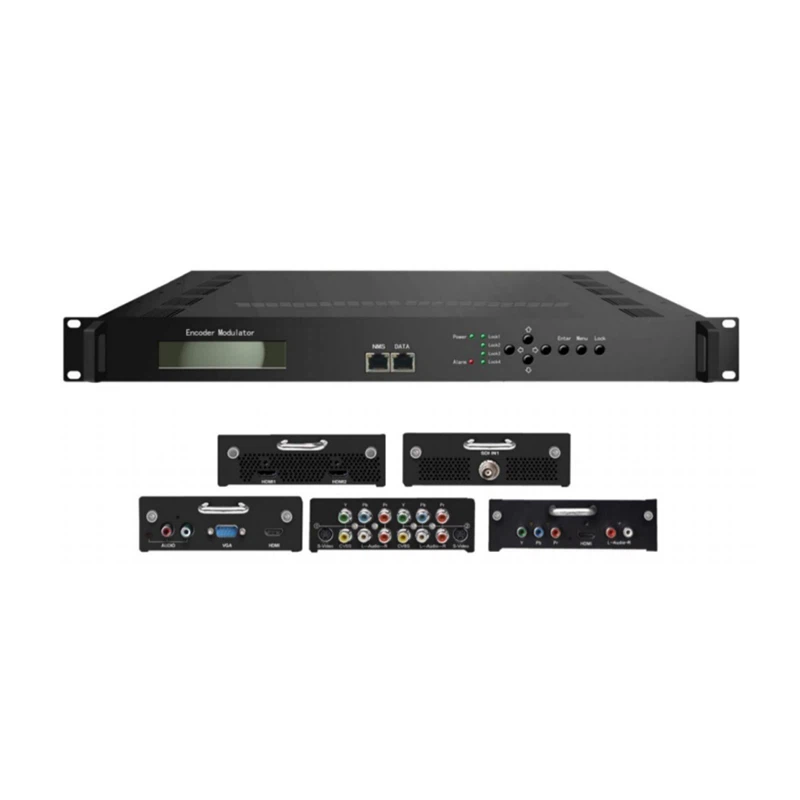
If you are interested in learning more about our [DVB - S2 modulators and their multi - channel capabilities, you can visit our website to explore our Satellite Modulator product page.
Conclusion and Invitation
In conclusion, a DVB - S2 modulator can indeed support multiple channels, thanks to the high spectral efficiency and advanced features of the DVB - S2 standard. However, broadcasters need to consider factors such as bandwidth limitations, signal quality, and compatibility when planning their multi - channel systems.
As a trusted DVB - S2 modulator supplier, we are committed to providing high - quality products and excellent service to our customers. If you are in the process of planning a satellite broadcasting system and need a reliable multi - channel DVB - S2 modulator, we would be delighted to discuss your requirements. Feel free to reach out to us, and our team of experts will work with you to find the best solution for your needs.
References
- "Digital Video Broadcasting (DVB); Second generation framing structure, channel coding and modulation systems for Broadcasting, Interactive Services, News Gathering and other broadband satellite applications (DVB - S2)" (ETSI EN 302 307), European Telecommunications Standards Institute.
- White papers on satellite broadcasting technology published by industry leaders in the field of DVB - S2 modulators.