


As a leading supplier of analog modulators, I've witnessed firsthand the critical role these devices play in modern communication systems. Analog modulators are fundamental components that convert low - frequency baseband signals into high - frequency carrier signals, enabling efficient transmission of information over various media. However, like any technology, analog modulators are prone to overload issues that can significantly impact their performance. In this blog, I'll delve into the nature of these overload issues, their causes, effects, and potential solutions.
Understanding Analog Modulators
Before we explore the overload issues, let's briefly understand what analog modulators are. Analog modulators operate on the principle of varying one or more characteristics of a high - frequency carrier signal (such as amplitude, frequency, or phase) in accordance with the information contained in a low - frequency baseband signal. This modulation process allows the baseband signal, which may carry audio, video, or other data, to be transmitted over long distances using radio waves, cables, or other transmission media.

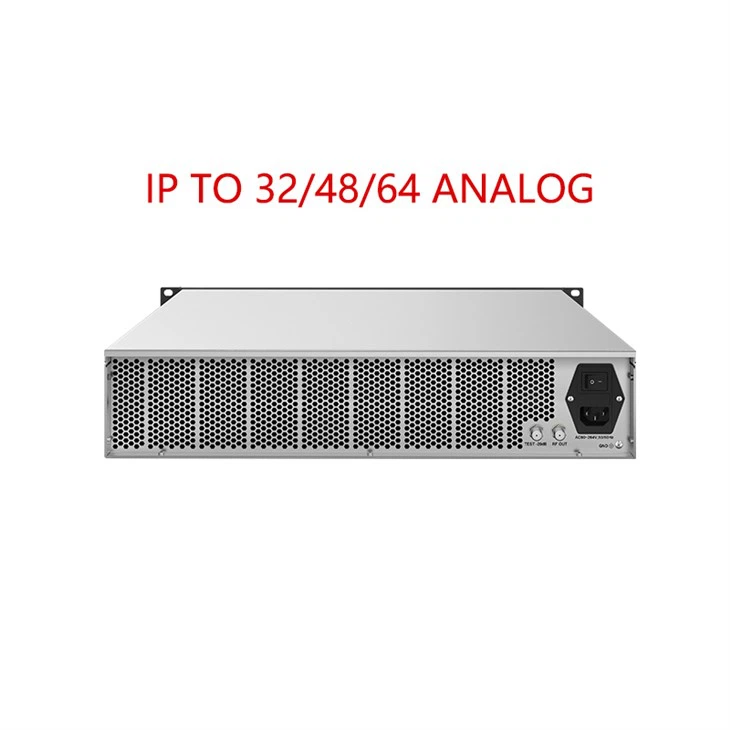
There are different types of analog modulators available, each with its own unique applications. For instance, our HDMI To RF Analog TV Transmitter is designed to convert HDMI signals into RF signals, making it possible to transmit high - definition video content over traditional analog TV networks. Another example is the IP To Analog Modulator, which enables the conversion of IP - based digital signals into analog signals for compatibility with legacy analog systems. And our IP To Analog NTSC PAL Modulator is specifically tailored to support both NTSC and PAL standards, providing flexibility for global applications.
Overload Issues in Analog Modulators
Definition and Types of Overload
Overload in an analog modulator occurs when the input signal exceeds the device's designed operating range. There are two main types of overload: amplitude overload and frequency overload.
Amplitude overload happens when the amplitude of the input baseband signal is too large. In amplitude - modulated (AM) systems, for example, if the peak amplitude of the baseband signal exceeds a certain threshold, the modulator may not be able to accurately represent the signal on the carrier. This can lead to distortion of the modulated signal, resulting in poor - quality transmission.
Frequency overload, on the other hand, occurs when the frequency content of the input signal is outside the frequency response range of the modulator. Analog modulators have a limited bandwidth within which they can operate effectively. If the input signal contains frequencies higher than the modulator's upper - cutoff frequency or lower than its lower - cutoff frequency, the modulator may not be able to properly modulate the carrier signal, leading to signal loss or distortion.
Causes of Overload
There are several factors that can cause overload in analog modulators. One common cause is improper signal conditioning. If the input signal is not properly filtered or amplified before it reaches the modulator, it may contain unwanted noise or have an amplitude that is too high. For example, in a system where multiple signals are combined before modulation, if the signals are not carefully adjusted in terms of amplitude and frequency, the combined signal may exceed the modulator's capacity.
Another cause is changes in the input signal characteristics. In some applications, the input signal may vary in amplitude or frequency over time. For instance, in a wireless communication system, the strength of the received signal can fluctuate due to factors such as distance from the transmitter, interference, or multipath fading. If the modulator is not designed to handle these variations, it may experience overload.
Additionally, component degradation can also lead to overload issues. Over time, the performance of the modulator's internal components, such as amplifiers and filters, may degrade. This can reduce the modulator's ability to handle input signals within its specified range, increasing the likelihood of overload.
Effects of Overload
The effects of overload in analog modulators can be far - reaching. One of the most obvious effects is signal distortion. As mentioned earlier, when the input signal exceeds the modulator's operating range, the modulated signal may not accurately represent the original baseband signal. This can result in poor audio or video quality, making it difficult for the end - user to receive and interpret the transmitted information.
Overload can also lead to increased noise in the output signal. When the modulator is overloaded, it may generate additional noise due to non - linear behavior of its components. This noise can interfere with the desired signal, further degrading the overall performance of the communication system.
In some cases, overload can cause damage to the modulator itself. Excessive input signals can overheat the modulator's components, leading to permanent damage. This not only results in the loss of the modulator but also requires costly repairs or replacements, which can disrupt the normal operation of the communication system.
Solutions to Overload Issues
Signal Conditioning
One of the most effective ways to prevent overload in analog modulators is through proper signal conditioning. This involves filtering the input signal to remove unwanted noise and adjusting its amplitude and frequency characteristics. For example, a low - pass filter can be used to remove high - frequency noise from the input signal, while an amplifier can be used to adjust the signal's amplitude to a level that is within the modulator's operating range.
Automatic Gain Control (AGC)
Automatic Gain Control is another important technique for preventing overload. An AGC circuit continuously monitors the amplitude of the input signal and adjusts the gain of the amplifier in the modulator accordingly. If the input signal amplitude increases, the AGC circuit reduces the gain to prevent overload. Conversely, if the input signal amplitude decreases, the AGC circuit increases the gain to maintain a constant output level.
Design Improvements
Modulator manufacturers can also make design improvements to enhance the device's ability to handle overload. This can include using components with higher power ratings and better linearity. Additionally, advanced modulation techniques can be employed to increase the modulator's dynamic range, allowing it to handle a wider range of input signal amplitudes and frequencies.
Conclusion
Overload issues in analog modulators are a significant concern that can have a detrimental impact on the performance of communication systems. As a supplier of analog modulators, we understand the importance of addressing these issues to ensure the reliability and quality of our products. By implementing proper signal conditioning, using techniques like Automatic Gain Control, and making design improvements, we can minimize the risk of overload and provide our customers with high - performance analog modulators.
If you're facing overload issues in your analog modulator systems or are looking for high - quality analog modulators that can handle a wide range of input signals, we'd love to hear from you. Contact us to discuss your specific requirements and explore how our products can meet your needs. Our team of experts is ready to assist you in finding the best solutions for your communication systems.
References
- Smith, J. (2018). Fundamentals of Analog Modulation. Publisher X.
- Johnson, A. (2020). Overload Phenomena in Communication Systems. Journal of Communication Technology, 45(2), 123 - 135.
- Brown, C. (2019). Signal Conditioning Techniques for Analog Modulators. IEEE Transactions on Signal Processing, 32(4), 210 - 221.