


Hey there! As a supplier of DVB - S2 modulators, I often get asked about the input format of these nifty devices. So, I thought I'd sit down and write a blog post to break it all down for you.
Let's start with the basics. A DVB - S2 modulator is a key piece of equipment in the satellite communication world. It takes digital data and modulates it onto a carrier signal so that it can be transmitted via satellite. But what kind of data can it actually handle?
Digital Video Broadcasting - Second Generation (DVB - S2) Standard
The DVB - S2 standard has been around for a while, and it's designed to provide high - efficiency satellite transmission. It offers better spectral efficiency compared to its predecessor, DVB - S. This means that more data can be squeezed into the same amount of bandwidth, which is a huge plus for broadcasters and service providers.
Input Formats
MPEG - 2 Transport Streams
One of the most common input formats for a DVB - S2 modulator is the MPEG - 2 transport stream (TS). MPEG - 2 is a well - established standard for video and audio compression. The transport stream is a format used to multiplex multiple video, audio, and data streams together. It's like a big container that holds all the different pieces of content.
Most broadcasters use MPEG - 2 transport streams because they are reliable and widely supported. When you send an MPEG - 2 TS to a DVB - S2 modulator, it can easily extract the individual streams and modulate them onto the carrier signal. The modulator will look for specific packet identifiers (PIDs) within the transport stream to figure out which streams are video, audio, or data.
MPEG - 4 AVC/H.264 and HEVC/H.265
With the advancement of video compression technology, MPEG - 4 AVC/H.264 and HEVC/H.265 have become popular alternatives to MPEG - 2. These standards offer much better compression ratios, which means you can transmit high - quality video with less bandwidth.
A good DVB - S2 modulator should be able to handle these new compression formats as well. When you input an MPEG - 4 AVC/H.264 or HEVC/H.265 stream, the modulator will need to be configured correctly to ensure proper modulation. This might involve setting the appropriate bitrate, frame rate, and other parameters.
ASI and IP Inputs
In terms of physical interfaces, DVB - S2 modulators usually support two main types of inputs: ASI (Asynchronous Serial Interface) and IP (Internet Protocol).
ASI Input: The ASI input is a traditional interface for MPEG - 2 transport streams. It's a serial interface that uses a coaxial cable to transmit the data. ASI is known for its reliability and low latency, which makes it a popular choice for real - time broadcasting applications.
IP Input: On the other hand, IP inputs are becoming more common as the industry moves towards IP - based infrastructure. An IP input allows you to send the transport stream over an Ethernet network. This is great for flexibility because you can easily integrate the modulator into your existing IP network. You can also take advantage of features like multicasting, which allows you to send the same stream to multiple destinations simultaneously.
Other Considerations
Input Bitrate
The input bitrate is an important factor to consider. The modulator needs to be able to handle the incoming data rate without dropping packets. If the input bitrate is too high, the modulator might not be able to process the data fast enough, leading to errors in the transmission.
You need to make sure that the DVB - S2 modulator you choose has a high enough input bitrate capacity for your specific application. For example, if you're broadcasting high - definition video, you'll need a modulator that can handle a higher bitrate compared to standard - definition video.
Input Signal Quality
The quality of the input signal also matters. Any noise or interference in the input signal can affect the performance of the modulator. You should use high - quality cables and connectors to minimize signal degradation. Additionally, it's a good idea to use signal conditioning equipment, such as amplifiers and equalizers, to improve the signal quality before it reaches the modulator.
Why Choose Our DVB - S2 Modulators?
As a supplier of DVB - S2 modulators, we pride ourselves on offering high - quality products that are reliable and easy to use. Our modulators support a wide range of input formats, including MPEG - 2, MPEG - 4 AVC/H.264, and HEVC/H.265. Whether you're using an ASI or IP input, our modulators can handle it with ease.
We also offer excellent customer support. If you have any questions about the input format or how to configure the modulator, our team of experts is always ready to help. We understand that every customer's needs are different, and we'll work with you to find the best solution for your specific application.
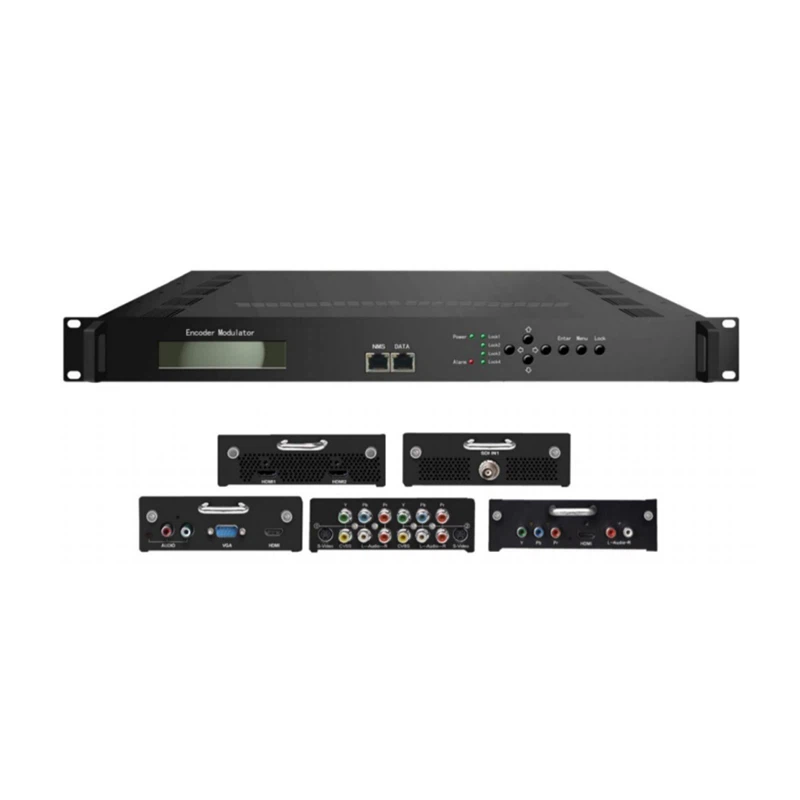
If you're in the market for a DVB - S2 modulator, I encourage you to check out our Satellite Modulator. It's a great product that combines high performance with affordability.
Conclusion
In conclusion, the input format of a DVB - S2 modulator can vary depending on your specific requirements. Whether you're using MPEG - 2 transport streams, MPEG - 4 AVC/H.264, or HEVC/H.265, and whether you prefer an ASI or IP input, there's a DVB - S2 modulator out there that can meet your needs.
If you're interested in learning more about our DVB - S2 modulators or have any questions about the input format, don't hesitate to get in touch. We're here to help you make the right choice for your satellite communication needs. Let's start a conversation and see how we can work together to improve your broadcasting or communication system.
References
- ETSI EN 302 307: Digital Video Broadcasting (DVB); Second generation framing structure, channel coding and modulation systems for Broadcasting, Interactive Services, News Gathering and other broadband satellite applications
- ITU - T H.264: Advanced video coding for generic audiovisual services
- ITU - T H.265: High efficiency video coding