


Are there RF modulators for satellite communication?
In the realm of modern communication, satellite communication stands as a cornerstone technology, enabling global connectivity, real - time data transfer, and a wide range of services from television broadcasting to weather forecasting. A crucial component in this complex ecosystem is the Radio Frequency (RF) modulator. As a supplier of RF modulators, I am often asked about the existence and role of RF modulators in satellite communication. The answer is a resounding yes, and in this blog, we will explore the significance, types, and applications of RF modulators in satellite communication.
The Basics of RF Modulators
Before delving into satellite communication, let's briefly understand what an RF modulator is. An RF modulator is a device that takes an input signal, such as an audio or video signal, and modulates it onto an RF carrier wave. This process allows the signal to be transmitted over a specific frequency band, which can then be received and demodulated at the other end. There are different types of modulation techniques, including amplitude modulation (AM), frequency modulation (FM), and phase modulation (PM), each with its own advantages and use - cases.
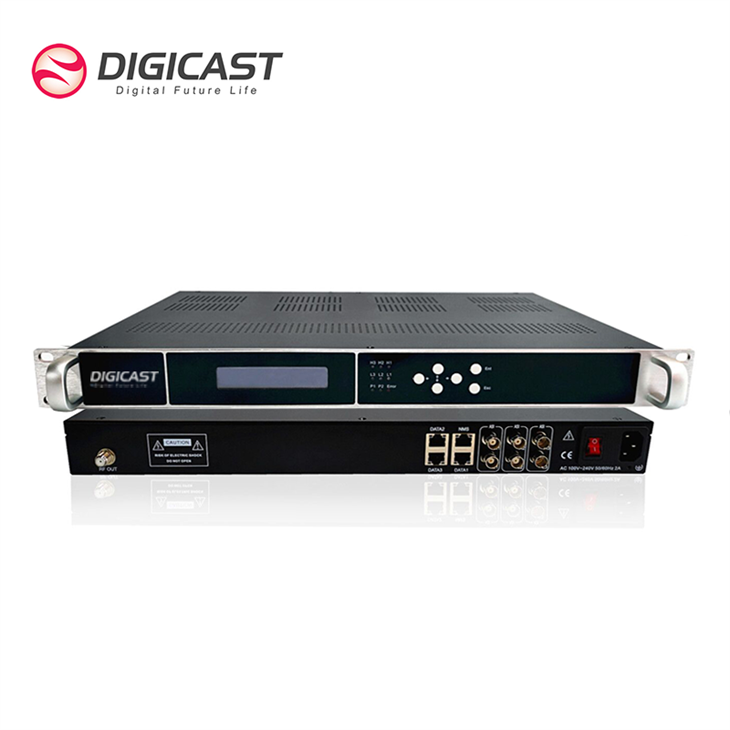
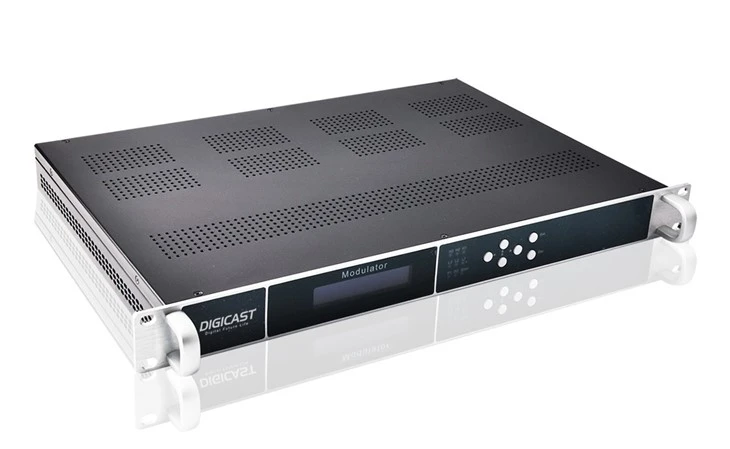
There are various types of RF modulators available in the market, and you can explore some of our offerings here: RF Video Modulator, Digital Tv Modulator, and RF Digital Modulator.
RF Modulators in Satellite Uplink
In satellite communication, the uplink is the process of transmitting data from an Earth - based station (ground station) to a satellite. RF modulators play a vital role in this stage. The ground station collects data from various sources, such as video feeds, voice communications, or scientific data. This data is then modulated onto an appropriate RF carrier wave using an RF modulator.
The choice of modulation technique in the uplink depends on several factors. For example, in high - data - rate applications, such as high - definition video streaming, more advanced modulation schemes like quadrature amplitude modulation (QAM) are often used. QAM allows for the transmission of multiple bits per symbol, increasing the data - carrying capacity of the RF signal. The RF modulator must be able to accurately implement these complex modulation schemes to ensure reliable data transfer to the satellite.
Another important aspect of the uplink is the frequency band. Different satellites operate in different frequency bands, such as C - band, Ku - band, or Ka - band. The RF modulator needs to be designed to work within the specific frequency range of the satellite system. This requires careful engineering to ensure that the modulator can generate a stable and high - quality RF signal at the desired frequency.
RF Modulators in Satellite Downlink
The downlink is the process of transmitting data from the satellite back to the ground. Similar to the uplink, RF modulators are also used in the satellite itself to modulate the data it has received or processed onto an RF carrier for transmission to Earth.
In the downlink, the RF modulator's performance is critical for maintaining the integrity of the transmitted data. The satellite is exposed to a harsh space environment, including radiation, extreme temperatures, and mechanical vibrations. The RF modulator must be designed to withstand these conditions and continue to operate reliably.
One of the challenges in the downlink is dealing with signal attenuation. As the RF signal travels from the satellite to the ground, it can be weakened by factors such as atmospheric absorption and rain fade. To compensate for this, the RF modulator may need to be adjusted to increase the power of the transmitted signal or use more robust modulation techniques.
Applications of RF Modulators in Satellite Communication
Broadcasting
Satellite broadcasting is one of the most well - known applications of satellite communication. RF modulators are used to convert television and radio signals into RF signals that can be transmitted via satellite. This allows broadcasters to reach a wide audience across large geographical areas. For example, direct - to - home (DTH) satellite television services rely on RF modulators to deliver high - quality video and audio content to millions of households.
Telephony
Satellite - based telephony services are also made possible by RF modulators. These services are particularly useful in remote areas where terrestrial communication infrastructure is limited or non - existent. RF modulators enable the modulation of voice signals onto RF carriers for transmission between ground stations and satellites, ensuring seamless communication.
Navigation
Global Navigation Satellite Systems (GNSS), such as GPS, also utilize RF modulators. These modulators are used to generate the RF signals that carry the navigation data from the satellites to the receivers on the ground. The accuracy and reliability of these signals are crucial for navigation applications, from personal navigation devices to aviation and maritime navigation.
The Future of RF Modulators in Satellite Communication
As satellite communication technology continues to evolve, the role of RF modulators is also expected to expand. With the increasing demand for higher data rates, lower latency, and more reliable communication, RF modulators will need to become more advanced.
One area of development is the use of software - defined radio (SDR) technology in RF modulators. SDR allows for greater flexibility in the modulation process, as the modulation schemes can be changed programmatically. This means that the same RF modulator can be used for different satellite systems or applications by simply updating the software.
Another trend is the miniaturization of RF modulators. As satellites become smaller and more cost - effective, there is a need for RF modulators that are smaller in size and consume less power. This will enable the development of more compact and energy - efficient satellite communication systems.
Conclusion
In conclusion, RF modulators are an essential component of satellite communication systems. They play a crucial role in both the uplink and downlink processes, enabling the reliable transmission of data between ground stations and satellites. From broadcasting to navigation, RF modulators are used in a wide range of applications in satellite communication.
As a supplier of RF modulators, we are committed to providing high - quality products that meet the evolving needs of the satellite communication industry. If you are interested in learning more about our RF modulators or are looking to make a purchase for your satellite communication project, we invite you to contact us for further discussion. Our team of experts is ready to assist you in finding the right RF modulator solution for your specific requirements.
References
- Sklar, B. (2001). Digital Communications: Fundamentals and Applications. Prentice Hall.
- Proakis, J. G., & Salehi, M. (2008). Communication Systems Engineering. Prentice Hall.
- Bertoni, H. L. (2000). Radio Frequency Electronics: Circuits and Applications. Prentice Hall.